
THE LIFE SERIES
On Growing Older
Growing older is less about losing youth than gaining perspective. An essay on discovering that fulfilment lies not in arriving somewhere else, but in seeing the ordinary with greater clarity.
Growing older suffers from an unfortunate problem of public relations. It gets discussed either with cheerful denial or unnecessary melancholy, leaving very little room for the ordinary reality sitting somewhere between the two. Entire industries have been built on persuading us that age is an inconvenience best concealed through creams, diets, motivational slogans, or suspiciously energetic exercise routines. At the opposite extreme sit nostalgic reflections insisting everything worth experiencing happened several decades ago and has been quietly falling apart ever since. Neither account has ever struck me as especially convincing. Ageing, at least as I have lived it, has been far less dramatic than that, and a good deal more interesting.
The first surprise is that one rarely feels older from the inside. Looking in the mirror occasionally offers persuasive evidence that time has been going about its business with real diligence, yet the inner conversation carries on with striking continuity. The person wondering what to read next, worrying about unfinished work, or getting disproportionately pleased by good coffee bears an uncanny resemblance to the person who had exactly the same concerns decades ago. The body slowly renegotiates its terms with gravity. Curiosity turns out to be far more stubborn.
What actually changes, almost without one noticing, is a person's relationship with ambition. In youth, ambition tends to look like a distant mountain. It has a reassuring clarity because it lives mostly in the future. Success looks measurable. One pictures particular achievements, certain milestones, recognisable destinations beyond which life will presumably arrange itself into something satisfying. It is an attractive idea, propped up partly by optimism and partly by the useful ignorance that comes with starting almost anything.
Time quietly revises all of this. One eventually discovers that achievements have a strange inability to transform the person who reaches them. A completed novel remains deeply satisfying. A film finally reaching an audience carries real joy. Recognition from readers or viewers is something one can only be grateful for. Yet each accomplishment turns out to be oddly modest in what it delivers. The morning after publication resembles the morning before it in most ways that matter. Tea still needs making. The next blank page shows its usual confidence. The cats remain entirely unimpressed by literary ambition. Life, with its usual consistency, declines to reorganise itself around a person's moments of professional significance, and this turns out not to be disappointing so much as freeing.
Success gradually stops behaving like a destination and starts resembling a companion met occasionally along the road. One enjoys its company while recognising that the journey has always taken up far more of a life than any single arrival ever could. The work slowly becomes more interesting than the applause around it.
That may be why I find myself pulled increasingly toward process rather than outcome. There was a time when finishing a book led naturally to thoughts of publication, reviews, readers. Those thoughts still show up, and they are perfectly reasonable. They simply take up less room than they used to. The greater satisfaction now sits in finding an honest sentence, cracking a difficult chapter, watching an idea reveal itself slowly after weeks of patient attention. The work has reclaimed the centre of the conversation on its own.
The same shift reaches past creativity into everything else. One becomes less interested in collecting experiences than in actually inhabiting them. Travel, for instance, once carried an admirable eagerness to see as much as possible. There was always another museum, another viewpoint, another historic building demanding urgent attention. These days I sometimes find more pleasure in spending an afternoon at a single café, watching a town go about its ordinary business around me. Nothing remarkable happens. Somehow one goes home having noticed a great deal more.
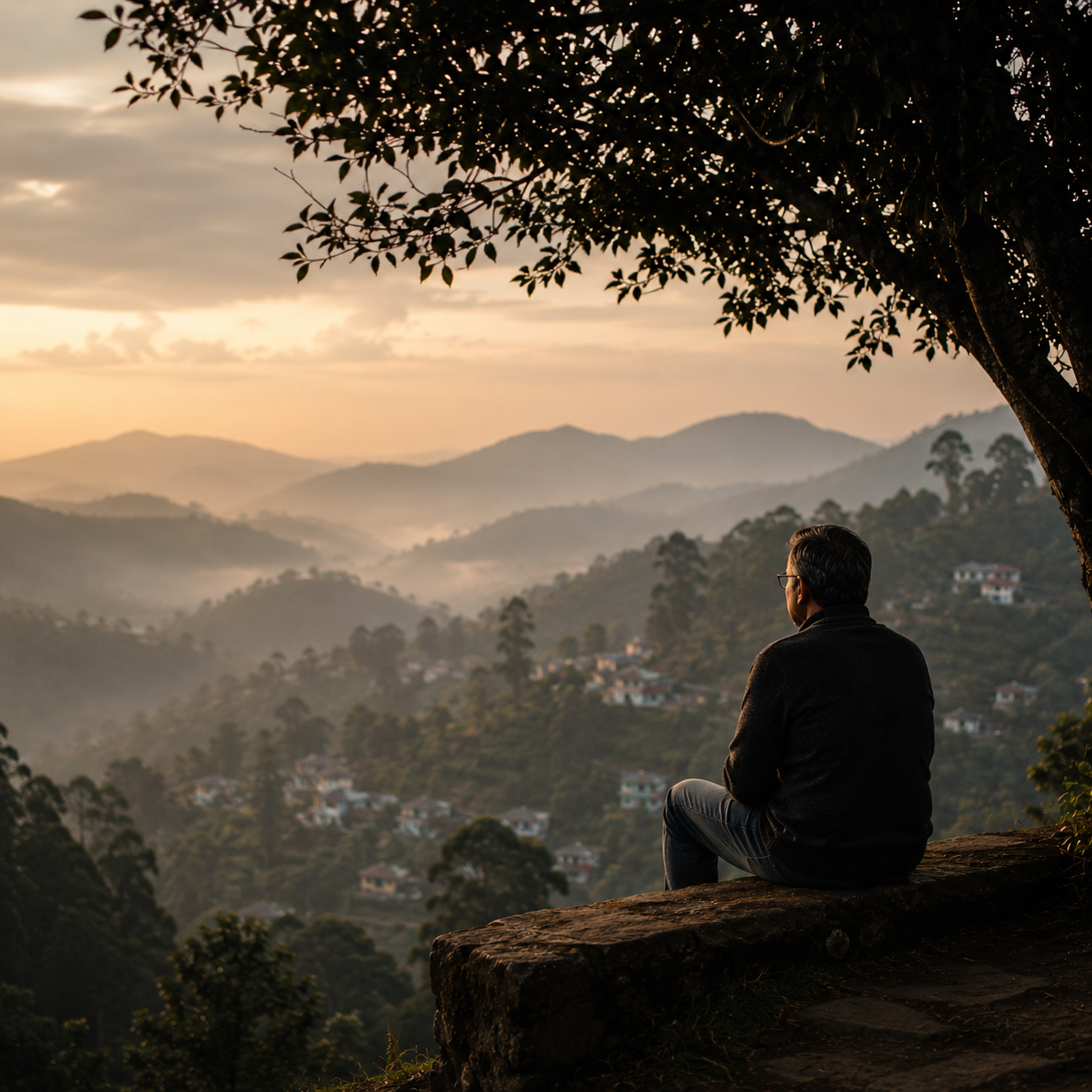
Age also simplifies certain anxieties in ways one does not expect. Many of the worries that once felt impressively important quietly lose their grip. One grows less concerned with appearing successful and more interested in being useful, less occupied with making an impression and more curious about making something worthwhile. Opinions that once demanded a spirited defence start yielding to the fairly comforting possibility that someone else may simply be seeing the world from a different hillside.
There is a real confidence that comes from no longer needing all the answers. I suspect this is one of the least celebrated gifts of growing older. Youth, reasonably enough, believes certainty to be a virtue. Experience offers a gentler possibility: questions often turn out to matter more than conclusions. Curiosity survives where certainty tends to go brittle. The older people I have admired most were rarely the ones with the loudest opinions. They were the ones whose interest in the world stayed undiminished after decades of living inside it. Maybe that is the real measure of ageing, not the years accumulated but how much wonder still travels with them.
One of the quieter discoveries that comes with age is that happiness becomes hard to separate from attention. In youth, happiness tends to attach itself to events waiting somewhere in the future. It belongs to graduation, the first job, the first home, the finished novel, the released film, the next ambitious project just visible past the horizon. The future has a real gift for convincing us that fulfilment is always just about to arrive, provided we stay patient a little longer.
Eventually one notices that life has been happening the entire time. The years were never made only of milestones. They were built out of ordinary mornings, familiar walks, conversations over tea, books read on quiet evenings, unexpected rain, meals shared with friends, and countless afternoons that would have looked entirely unremarkable to anyone watching from outside. What once seemed like the gaps between the important events turns out to have been the actual substance of the life. The destinations stay memorable. It is the ordinary days that become home, and that reshapes what success even means.
There was a time when success felt almost entirely external, something to be counted, measured, compared with reassuring precision: books sold, films screened, invitations received, reviews written. These things still matter, and I remain genuinely grateful for every reader and every audience member who has chosen to spend time with something I made. Gratitude does not fade with age. It deepens. But I have come to notice that external achievement has an understandable habit of belonging to a particular moment. It arrives, gets celebrated, and life, with admirable punctuality, promptly asks what you plan to make next.
The deeper satisfaction has proved sturdier than any of that. It lies in discovering that one still wants to create. That curiosity still shows up before breakfast. That an overheard conversation still refuses to leave quietly. That a page capable of becoming something worthwhile still feels as inviting as it did decades ago. Creativity does not get easier with age, in my experience. It gets more companionable. One stops expecting inspiration to arrive dramatically and instead builds a quiet trust that showing up, paying attention, and staying patient will eventually get the work where it needs to go.
Age also softens the strange urgency with which we once measured ourselves against other people, and this turns out to be genuinely freeing. Every generation has people who seem to have achieved everything sooner, travelled further, or won more recognition. Comparisons like these feel enormously important while one is making them. Given time, they start sounding like a conversation overheard from another room, faintly audible but no longer especially relevant. Every meaningful creative life runs on its own rhythm. Some books arrive early. Others take decades. Some artists get recognised almost immediately. Others keep working for years before quietly finding an audience. Looking sideways gets a lot less interesting once one is genuinely absorbed in the road directly ahead.
There is another change I have come to value, though I noticed it only slowly: I have grown more forgiving of unfinished ambitions. Youth tends to assume that every worthwhile dream must eventually become real, provided one works hard enough. Experience suggests something gentler. Some ideas stay unwritten. Certain journeys never happen. Projects sometimes end up different from how they first looked in the imagination, and this is not always failure. Sometimes it is simply life exercising its perfectly reasonable right to turn out differently from the original plan. Accepting that has made the ambitions that do survive feel more meaningful, not less.
I have also become less interested in being remembered than in making work worth remembering. There is a real difference between the two. The first concerns reputation, a strange thing that lives almost entirely in other people's minds. The second concerns craft, attention, and honesty, all of which stay within one's own care. Reputation comes and goes according to circumstances no one fully controls. The work itself stays wonderfully practical. It only asks whether today's sentence is true, whether today's scene deserves another pass, whether today's effort has brought the story a little closer to what it ought to be.
I find growing older unexpectedly reassuring for exactly this reason. It strips away certain illusions and leaves something far more useful behind. Fulfilment, it turns out, rarely announces itself with any ceremony. It builds up over years spent doing work one believes in, reading books that stretch the imagination, walking familiar roads, keeping old friendships, staying curious about strangers, and continuing to notice the small details stories are so often made from.
There is, of course, loss. Pretending otherwise would be dishonest. Time asks every life to part with people, places, and versions of ourselves that cannot come along indefinitely. Even here, though, age brings some perspective. Grief slowly becomes less an interruption to life than one of its languages. We carry the people we have loved not because memory stays perfectly intact, but because their influence keeps shaping how we see the world. Presence takes on forms a younger version of oneself would barely have recognised.
If I have learned anything from growing older, it is that the best years are not necessarily the earliest ones. Every decade has brought something the one before it could not. Youth carried energy and possibility. The years after have brought perspective, patience, and the comforting knowledge that a meaningful life gets built less through dramatic transformation than through thousands of ordinary days lived with care. I would not trade one stretch for the other. They belong to the same story.
That, in the end, is the quiet privilege of age. It lets a person stop asking whether life has unfolded exactly to plan and start appreciating the far more interesting path it actually took. The ambitions change. Success gets gentler. Happiness grows less dependent on arriving somewhere and more attentive to the getting there. The future keeps inviting new work, new books, new conversations, new stories. The difference is that one no longer chases it quite so anxiously, trusting that whatever lies ahead will show itself in due course, and that today, imperfect and ordinary as it looks, already holds more than enough to deserve one's full attention.
AK Srikanth is an Indian novelist, filmmaker and essayist whose work explores storytelling across literature, cinema and performance. He is the author of A Song for Eresha and writes from the Nilgiris in southern India.
Related Essays