
Ordinary People, Extraordinary Lives
THE LIFE SERIES
How curiosity, observation and empathy transform ordinary people into unforgettable characters, and why every life contains a story worth understanding.
One of the questions I get asked with surprising regularity is where my characters come from. People sometimes picture writers moving through life with a discreet notebook, secretly recording unusual conversations, eccentric strangers, or dramatic incidents that might one day become a novel. I confess this sounds a good deal more organised than my own experience. Characters rarely arrive whole. They build up gradually out of observation, memory, and imagination, until one eventually reaches the slightly unsettling conclusion that they have been quietly present for far longer than first realised.
The more interesting question is not where characters come from, but why certain people stay with us while countless others simply vanish. I have noticed, over time, that I am seldom drawn to lives that announce themselves loudly. Celebrity has never held much interest on its own. Power is occasionally fascinating, usually because of the ordinary human frailty hiding underneath it. My attention keeps returning, almost without deciding to, to people whose names will never appear in a history book: the retired schoolteacher who still waters the same garden every morning, the elderly gentleman who arrives at the same café every afternoon carrying yesterday's newspaper, the shopkeeper who remembers every customer's preferences with an accuracy that borders on the uncanny, the woman waiting at a bus stop whose expression hints at an entire novel unfolding behind an otherwise unremarkable face.
Fiction, it seems to me, begins right where casual acquaintance ends. We spend enormous stretches of our lives passing one another with real efficiency. We know occupations, addresses, perhaps the names of a few relatives. We trade polite greetings, discuss the weather with appropriate seriousness, and carry on our respective ways. Underneath this entirely civil arrangement sits another world we almost never see. Every person carries private hopes, disappointments, compromises, loyalties, fears, and memories invisible to everyone around them. The strange thing is not that such hidden lives exist. It is how rarely we stop long enough to imagine them.
That is why storytelling has always struck me as an act of curiosity before it becomes an act of invention. Observation gets misread as the passive business of noticing what is already visible. In practice it demands much more than that. It asks us to stay with another person long enough for first impressions to stop being enough. A novelist is not out collecting interesting faces or unusual habits. A novelist is slowly learning to ask better questions about lives that would otherwise seem entirely familiar.
A novelist does not simply invent people. A novelist wonders about them. What happened before they walked into the room? What private conversation is still running long after everyone else assumes it ended? What regret follows them, unnoticed, through an ordinary afternoon? Curiosity has a generosity that judgement lacks. It assumes there is always more to understand. Every character I have ever written worth keeping began not with certainty but with a question.
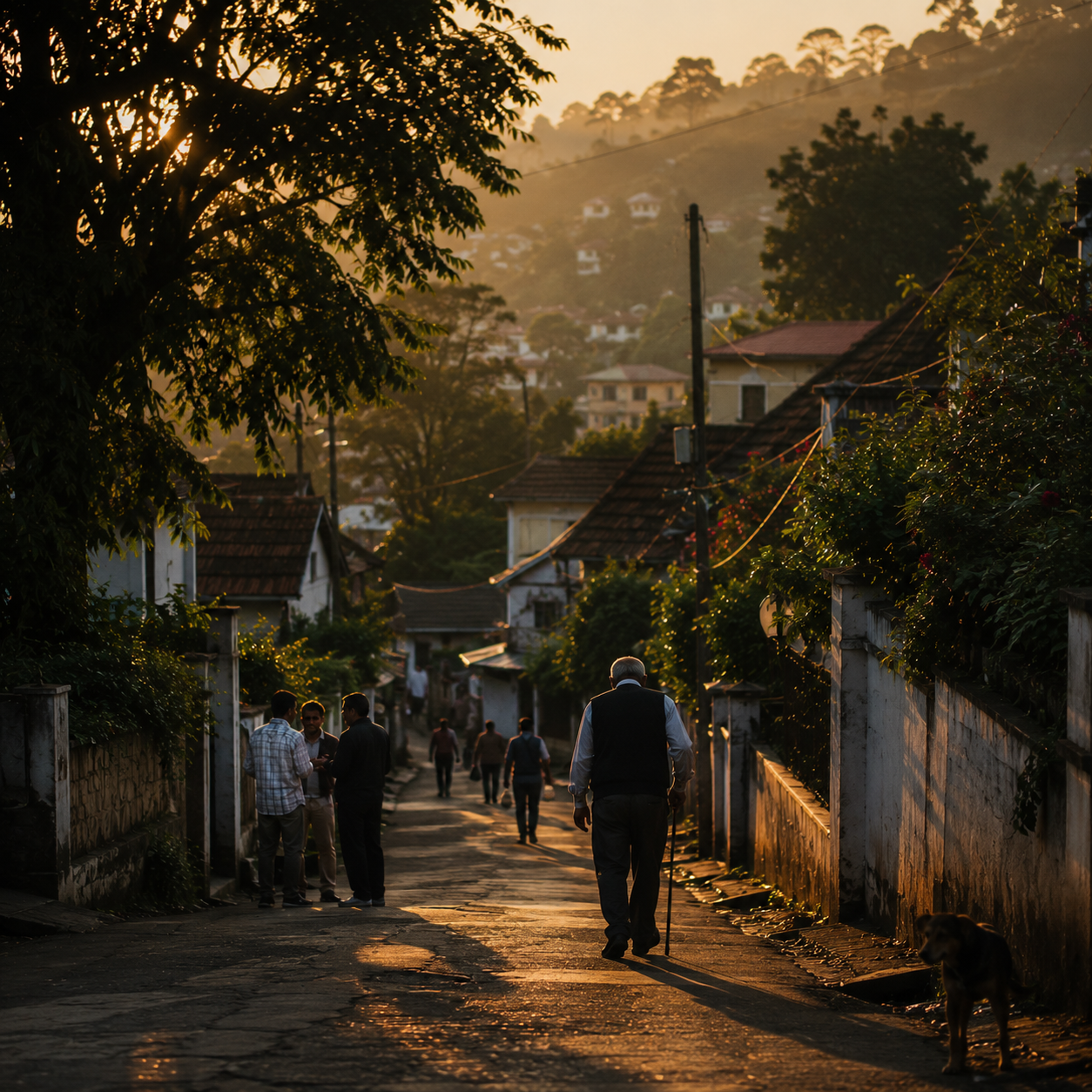
This habit of wondering reaches well past writing. Living in the Nilgiris has reinforced it. Small towns have an enviable way of reminding you that every familiar face carries a history running well past the brief encounters through which you know them. The man tending roses outside his gate has almost certainly lived several entirely different lives before arriving at this particular morning. The woman serving tea has known celebrations and griefs invisible inside the ordinary rhythm of her work. Children racing home from school already carry ambitions and anxieties adults politely overlook, because childhood has picked up the rather misleading reputation of simplicity.
The older I get, the less I believe there is such a thing as an ordinary life. There are certainly ordinary routines, thank goodness. Breakfast keeps showing up with real consistency. Buses keep arriving with varying degrees of punctuality. Dogs keep investigating lampposts with real scholarly dedication. But underneath these familiar repetitions, every human life unfolds with striking complexity. Every marriage holds conversations known only to two people. Every friendship has its own private language. Every family builds customs so familiar that the people living inside them barely notice how particular those customs are. The apparent ordinariness belongs mostly to the observer, who simply lacks access to the deeper story.
Literature has always understood this better than almost anything else does. Anton Chekhov understood, perhaps better than anyone, that the deepest dramas often unfold without any spectacle at all. His stories remind us that an ordinary afternoon, watched with enough patience, can reveal as much about human nature as the most dramatic event. Fiction, I have come to believe, asks for exactly that kind of attention.
Some of the greatest novels ever written concern people whose outward lives look almost modest: butlers, teachers, shopkeepers, doctors, children, clerks, ageing parents. They inherit houses, lose jobs, fall in love, disappoint one another, occasionally miss trains. None of it looks especially remarkable summarised in a sentence. Its meaning comes through attention. Great writers have a real willingness to stay beside a moment until its emotional truth surfaces on its own. They understand that drama does not need spectacle. It comes out of the small, quiet decisions through which people become who they are, and cinema, at times, forgets this.
The temptation to mistake scale for importance has become increasingly persuasive. We have grown used to stories in which the fate of nations, planets, or entire civilisations rests on a handful of protagonists showing extraordinary courage before the credits roll. Such stories have their pleasures, and I watch them with genuine enjoyment. But I often walk away feeling I have witnessed impressive events rather than recognised human beings.
The stories that stay with me tend to ask different questions. What happens when two people misunderstand each other for years without meaning any harm? How does loneliness quietly reshape an ordinary afternoon? Why does a small, forgettable kindness stay vividly remembered decades later while far more dramatic moments fade? Questions like these rarely produce explosions, though they often produce something harder to achieve: recognition. That may be what I am always searching for at the start of a new story. Not extraordinary circumstances, but ordinary people watched closely enough that the real richness of their inner lives becomes visible.
As I get older I have grown suspicious of the idea that significance belongs only to the exceptional. We have picked up a habit of measuring lives by visibility, admiring those who occupy public stages, whose achievements get widely recognised, whose names travel further than they themselves ever will. There is nothing wrong with celebrating excellence. But history, I suspect, has always overlooked its most remarkable people simply because they were too busy living to become famous.
The elderly man who spends every morning caring for a spouse who no longer remembers his name will never win an award for loyalty. The woman who quietly holds a family together through years of financial strain is unlikely to appear in a documentary about resilience. The schoolteacher whose encouragement redirects the course of a child's life may never learn that it happened at all. Their lives go on without applause, yet leave behind consequences of real depth. Greatness, more often than not, happens beyond the reach of public attention.
This is part of why I have never been especially drawn to heroes. Heroes tend to turn into symbols, and symbols have an unfortunate habit of losing their humanity. They start representing ideas instead of people. Real human beings are messier than that. They are generous one afternoon and impatient the next. They carry old wounds that surface at unfortunate moments. They disappoint the people they love while sincerely wishing they had done otherwise. They make admirable choices for entirely flawed reasons, and foolish ones while trying to do something kind. It is exactly these contradictions that make them worth writing about, and kindness, I have always found, is more interesting to write than perfection.
Perfection has a faintly intimidating quality. It leaves very little room for recognition because almost no one has actually met it in ordinary life. Kindness shows up in far more modest shapes. A neighbour notices someone has been unwell and quietly leaves food by the door. A stranger lifts a heavy suitcase without being asked. A shopkeeper remembers the brand of tea an elderly customer prefers because forgetting would somehow feel discourteous. These gestures look small, almost invisible on their own, and yet they can genuinely change someone's day. Stories have always understood that human dignity shows up in moments like this far more often than in spectacular acts of courage.
Living in the Nilgiris has deepened that conviction. Small communities carry long memories. People know each other not through carefully managed first impressions but through years of ordinary encounters. Someone is remembered not for saying something clever once but for quietly helping during a hard stretch. Reputation grows less from performance than from consistency, and it is an entirely different way of understanding character, one I have found far more interesting than the polished identities we tend to build for strangers.
Writers, I suspect, are naturally drawn to this quieter way of seeing people because fiction runs on attention rather than assumption. It asks us to stay with someone long enough for the easy explanations to stop being enough. The impatient man may simply be frightened. The cheerful woman may have learned that humour is sometimes the gentlest form of resilience. The quiet child at the edge of the classroom may carry an imagination bigger than anyone has yet noticed. Every life gets richer the moment we stop summarising it.
Observation is one of the most generous habits a storyteller can build, and it is frequently confused with scrutiny, though the two have nothing in common. Scrutiny hunts for evidence. Observation hunts for understanding. One reduces people to conclusions. The other refuses to conclude too soon, leaving room for surprise, and every memorable character in literature carries that quality. Just when we think we have them figured out, another layer turns up underneath the first.
That is also why I like returning to the same places. Familiarity lets attention deepen. The café owner slowly becomes more than the person who serves tea. The neighbour tending roses acquires a history. The elderly couple met on evening walks become part of the landscape of one's own life. Stories rarely come from dramatic first meetings. More often they grow through repetition, through the slow build-up of ordinary encounters that gradually reveal an extraordinary amount underneath.
There is a real democracy in seeing the world this way. It refuses to believe some lives deserve stories while others merely provide scenery. Every person is the central character of their own existence. Every conversation belongs to a larger history invisible to whoever is passing briefly through it. Once you start seeing the world this way, it becomes almost impossible to write anyone off as uninteresting. They may stay unknown. They are rarely ordinary.
When I begin writing, I rarely ask whether a character is extraordinary enough to carry a novel or a film. I ask something simpler: do they have an inner life worth understanding? If the answer is yes, the story tends to follow on its own. Human beings have been falling in love, making mistakes, forgiving one another, carrying grief, raising children, growing old, and searching for meaning for thousands of years. The circumstances change. The feelings stay astonishingly familiar.
That is the quiet purpose of storytelling. It reminds us that every passing stranger carries a world as intricate as our own, that every ordinary face holds memories, hopes, disappointments, and moments of private joy that will never be fully visible from the outside. Fiction does not invent that richness. It simply gives us permission to notice it.
The stories that stay with me are rarely the ones that try to convince me I have witnessed extraordinary people. They are the ones that send me back to the ordinary world with more patience and a sharper curiosity. They leave me walking a little more slowly, listening a little more carefully, wondering, as every storyteller eventually learns to wonder, what kind of life might be unfolding right now behind the next familiar face.
AK Srikanth is an Indian novelist, filmmaker and essayist whose work explores storytelling across literature, cinema and performance. He is the author of A Song for Eresha and writes from the Nilgiris in southern India.
Related Essays