
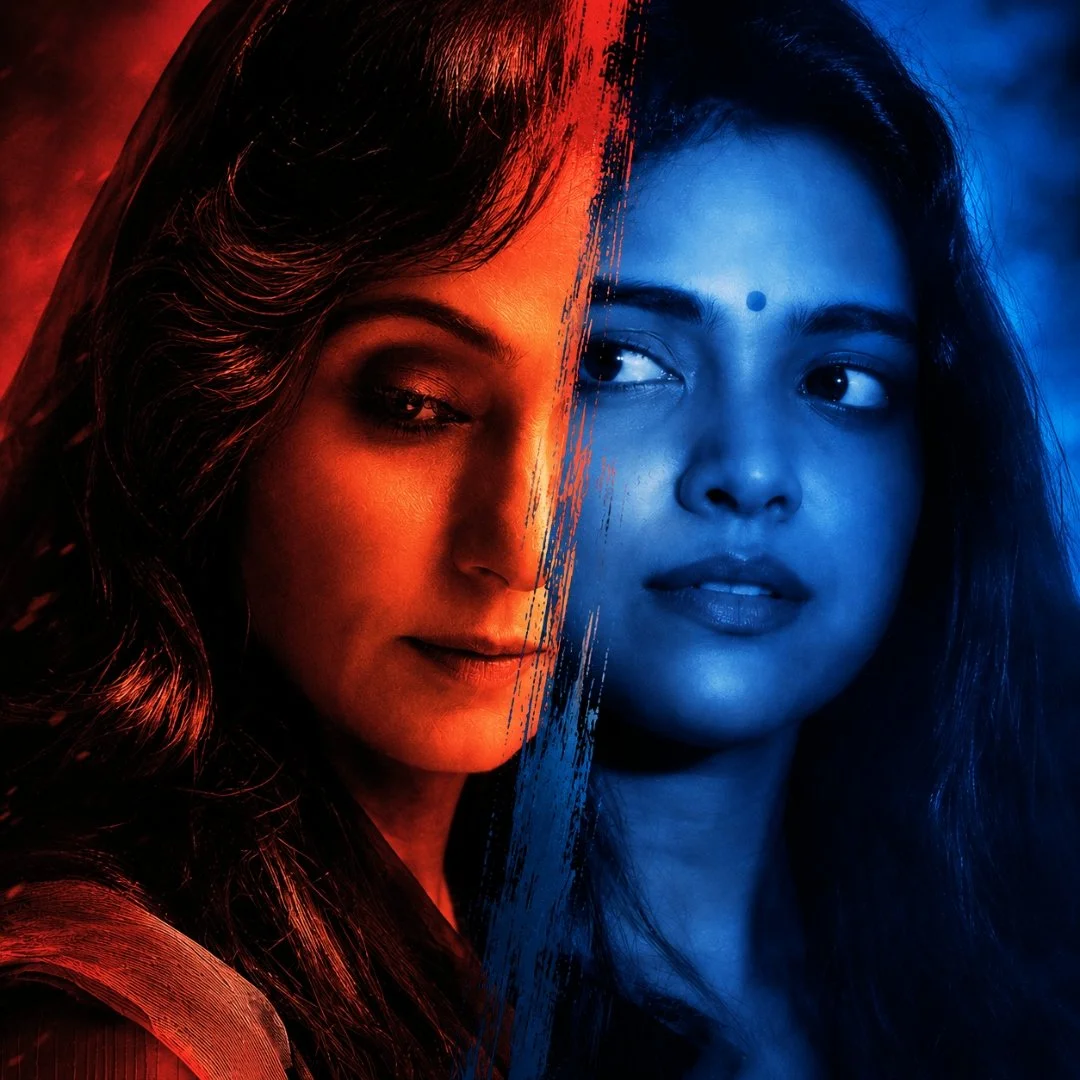
When A Story Demands Two Mediums
THE WRITING SERIES
Why do some stories become both novels and films? Drawing on the experience of developing A Song for Eresha simultaneously as a novel and a feature film, this essay explores how literature and cinema illuminate different dimensions of the same story.
People occasionally ask whether I wrote the novel first or the screenplay. The question sounds reasonable enough until one tries to answer it. My instinct is usually to pause for a moment before admitting that the story arrived first, long before either medium had begun asserting its preferences. There was no novel, no screenplay, and certainly no film. There was a world that refused to leave me alone. The people in it had already begun speaking, arguing, loving, and disappointing one another before I had the faintest idea what shape their lives would eventually take.
Stories have personalities of their own. Some seem entirely content within the covers of a book. Others come alive most naturally on a stage or through the movement of a camera. Every so often, though, a story turns up that seems oddly dissatisfied. It accepts one medium gratefully while hinting that something essential has been left unsaid. A Song for Eresha belonged to that small and rather inconvenient category.
I did not see this at first. Like many writers, I started out assuming that choosing a medium was just another creative decision, no different from picking a point of view or deciding where a story ought to begin. The longer I lived with Eresha and her world, the less that assumption held up. Certain moments demanded language. Others resisted it completely.
Prose can inhabit some experiences with real intimacy. A novel enters places no camera can reach. It follows the hesitant rhythm of thought, the contradictory emotions that accompany hard decisions, the private negotiations people run entirely within themselves. It can linger over memory, doubt, and longing without ever making a character speak aloud. A single sentence moves between the present, the past, and an imagined future before returning to where it began. Reading becomes a collaboration: the reader supplies voices, faces, landscapes, and silences out of their own private storehouse.
Cinema works differently. The camera has real gifts, though mind-reading has never been one of them. It watches behaviour, not thought. It notices the slight hesitation before a hand reaches for another, the almost invisible shift in posture when unwelcome news arrives, the silence that settles between two people who have just realised there are no satisfactory words left. Film deals in presence. It asks the audience to find emotion through faces, movement, rhythm, music, and light. A novelist might spend three pages describing loneliness. A filmmaker sometimes needs nothing more than an empty corridor after someone has walked away.
Neither approach is better than the other. They ask different questions. We talk about adaptation as if it were mainly a matter of translation, moving a finished work from one medium to another. Michael Ondaatje once said that watching The English Patient become a film did not diminish the novel but opened up possibilities that belonged to cinema alone. The two works now sit side by side, each complete on its own while enlarging the other. I recognised something similar while living with A Song for Eresha. The relationship was never one of replacement. It was a conversation.
The relationship, I have come to think, runs both ways. Every medium picks up on different parts of the same emotional landscape. Literature enters thought with real freedom. Cinema finds meaning through gesture, rhythm, silence, and the physical presence of people in space. The story stays recognisably itself, and each form lights up dimensions the other could only gesture toward.
Eresha herself lived in two entirely different dimensions. There was the woman everyone around her could see: disciplined, admired, composed, quietly in charge. And there was the life underneath that composure, a landscape of affection, restraint, uncertainty, and conflict that almost no one around her would ever fully know. The novel could follow her into that hidden interior, stay beside her while nothing was said, trace thoughts too private to ever become dialogue. The film needed a different approach entirely. Everything the audience understood had to come through performance, gesture, framing, silence, and the small choreography of human behaviour.
It was moving between the two forms that showed me how much a medium shapes an audience's relationship with a story. Reading may be the most intimate of the arts. A novel unfolds at exactly the speed the reader sets. One can pause after a paragraph, reread a page, sit with a sentence, close the book for several days and pick it back up. Literature has an elasticity of time nothing else offers.
Cinema asks for something else. For two hours the audience gives itself over to another rhythm entirely. The director sets the pace. The editor decides how long an image stays before giving way to the next. Music arrives when it is invited and stops just as deliberately. Every moment has already been measured before the audience walks in. Watching a film is like travelling down a river. Reading a novel is like wandering a landscape where every reader finds a slightly different path through it.
These differences mattered here because A Song for Eresha is, at its core, a story about restraint. It concerns feelings that are felt far more often than spoken, and such stories ask for real patience from writer and audience alike. They lean on implication, hesitation, and silence rather than declaration. The novel could stay inside those silences. The film had to make the audience see them.
Over those years I found myself writing scenes that looked nearly identical in purpose but entirely different in execution. A conversation running several pages in the novel might become nothing more than exchanged glances on screen. Elsewhere a moment lasting barely a paragraph on the page needed several minutes of screen time because atmosphere itself had become part of the storytelling. Neither version was adapting the other. They were growing side by side, like two performances of the same piece of music played by different orchestras.
That changed how I think about adaptation altogether. Most of us grow up assuming a novel becomes a film through careful reduction: pages disappear, scenes get condensed, characters occasionally merge, until the story fits inside two hours. There is truth in that, but it misses something more interesting. A film does not only subtract. It discovers. Whole emotional possibilities appear only once actors inhabit a role, once music starts speaking alongside the dialogue, once light, weather, and landscape quietly turn into characters in their own right.
There were scenes in A Song for Eresha I had written many times already. I knew every line, every emotional turn, every silence by heart. Then the first time I watched an actor pause before speaking, or glance away a fraction longer than I had imagined on the page, the scene showed me something I had never consciously put there. Performance can light up the space between words in a way writing cannot. The screenplay gives the architecture. The actor finds the rooms inside it.
Music does something similar. In prose, rhythm exists almost invisibly, in the cadence of a sentence, and every reader hears it a little differently. Cinema has another instrument entirely. A single musical phrase can deepen a feeling already present without ever announcing itself, or it can wreck a scene by explaining a feeling the audience has already understood on its own. The best film scores know when to speak, and, more importantly, when to stay out of the way. They accompany. They do not instruct.
The landscape surprised me too. A novelist can describe a place through observation, memory, reflection. Film asks the audience to stand inside it. Mist gathering over water, afternoon light falling across an old building, leaves moving slowly before rain, these stop being descriptions and become lived experience. Place stops functioning as backdrop and starts shaping the emotional weather of every scene. Watching the finished film, I realised the world around the characters had been part of the story the whole time.
Still, there were just as many moments when I was grateful the novel existed. Some emotions resist performance because they belong almost entirely to thought. A person can look perfectly composed while an entire interior world rearranges itself underneath. Literature has a particular intimacy because it lets us live inside that invisible territory. A reader can spend several pages with a single hesitation, an unspoken fear, a private memory, without a trace of impatience. The movement happens inwardly. Nothing visible changes. Everything that matters does.
That kind of restraint asks for trust from both directions. The novelist trusts readers to stay inside another consciousness without a constant supply of external action. The filmmaker trusts audiences to notice what has been left unexplained. Both forms ask for patience. They just reward it differently.
People occasionally ask whether I prefer the novel or the film. It has always struck me as a bit like being asked to prefer conversation over music. The question assumes the two are trying to do the same thing. They are not. Each reveals something the other cannot reach. The novel lets us become companions to a consciousness. The film lets us watch lives unfold with a physical immediacy no page can replicate. Neither replaces the other. Together they carry on a conversation that neither could finish alone.
Writing the novel changed the film in ways I did not expect. Knowing the characters' interior lives in such detail shaped how scenes were directed, even when none of that interiority ever showed up on screen directly. Every pause had a history behind it. Every glance carried emotional context the audience never saw but the performers understood completely. The actors were not just memorising dialogue. They were inhabiting lives that ran past the edges of each scene. Most of that life stayed invisible, and that may be exactly why it could still be felt.
The influence ran the other way too. Months of thinking cinematically changed how I wrote prose. I found myself paying closer attention to gesture, physical space, light, silence. Scenes on the page started moving with a sharper sense of rhythm and visual composition. The two works shaped each other without either one staying untouched. They became travelling companions, each one occasionally pointing out something the other had almost missed.
The whole experience also left me with more respect for the audience. Readers and viewers get underestimated constantly. We have picked up a habit of explaining feelings before letting people find them for themselves. The best novels and the best films have always resisted that. They trust the intelligence, patience, and emotional generosity of the people encountering them, understanding that participation goes deeper than explanation ever can. That trust became one of the guiding rules for both the novel and the film.
I no longer think of A Song for Eresha as a novel that became a film, or a film accompanied by a novel. Both descriptions feel incomplete. They came out of the same story because that story seemed determined to express itself in two different languages. One speaks in sentences, interior lives, and the reader's own boundless imagination. The other speaks in faces, movement, music, silence, and light. Each reaches somewhere the other cannot.
That may be the real lesson the project taught me. We tend to assume the medium is just a vessel, carrying a story from writer to audience. I have come around to the opposite view. The medium shapes the story itself. It decides what can stay hidden, what has to become visible, and how a feeling travels from one person to another. Sometimes a story finds its one true home in a single form. Every so often, though, one shows up that refuses that kind of simplicity. It asks to be read. It asks to be watched. What the page leaves unsaid, the screen can show. What the screen cannot show, the page has usually already said.
AK Srikanth is an Indian novelist, filmmaker and essayist whose work explores storytelling across literature, cinema and performance. He is the author of A Song for Eresha and writes from the Nilgiris in southern India.
Related Essays